GBV or Ideology? Why Violence is Violence and Everyone is at Risk
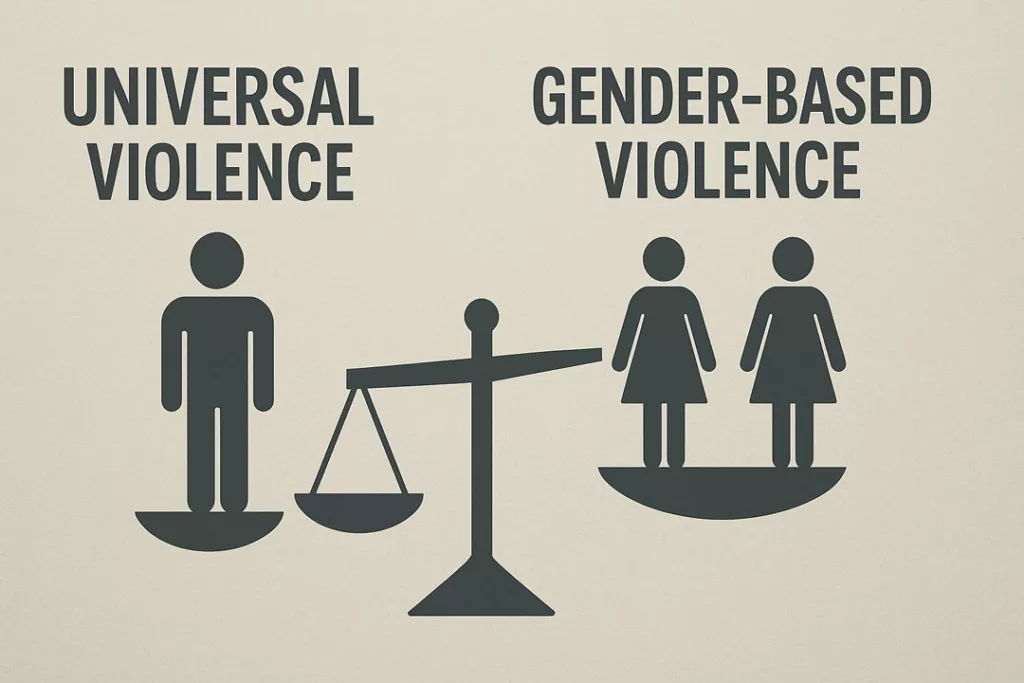
Gender-Exclusive Frame Risks Sidelining Male Victims and Universal Harms
Gender-Based Violence (GBV) has become a dominant narrative in South Africa and globally, presented as a crisis requiring urgent intervention. Governments, NGOs, and the United Nations have amplified this framing, supported by philanthropic heavyweights like Open Society Foundations, Ford Foundation, and the Rockefellers. Yet this focus raises critical questions: why does violence against women and girls dominate public discourse while men, boys, and other victims remain largely invisible? Why is political activism prioritized over law enforcement and systemic crime prevention?
Violence is not selective. Men, women, and children are all at risk. The insistence on framing violence primarily through gendered categories risks ignoring universal human rights, distorting policy priorities, and leaving many victims underserved.
Historical Origins of GBV
The term Gender-Based Violence emerged from feminist activism in the late 20th century. Scholars like Diana Russell, who coined “femicide,” and networks like the Center for Women’s Global Leadership (CWGL) were pivotal in bringing international attention to violence against women.
By the early 1990s, the United Nations codified GBV in its Declaration on the Elimination of Violence Against Women (1993), institutionalizing the concept globally. NGOs such as Global Fund for Women and campaigns like 16 Days of Activism pressured governments to adopt the terminology. South Africa, influenced by these transnational campaigns, later declared GBV a national crisis, elevating it above other categories of violent crime.
Observation: GBV framing privileges women and girls while largely ignoring male victims of domestic violence, intimate-partner abuse, or systemic trauma.
Philanthropic Influence: Funding Ideology Over Justice
Major foundations have played an instrumental role in amplifying GBV narratives:
- Open Society Foundations (OSF) – funds feminist, LGBTQIA+, and human-rights NGOs. Reports from the Capital Research Center (CRC, 2020) highlight OSF’s indirect support for groups associated with BLM and confrontational activism.
- Ford Foundation – provides grants for equality and human-rights programs but emphasizes advocacy over funding law enforcement or systemic crime-prevention infrastructure.
- Rockefeller Philanthropies – supports legal and policy advocacy, overlapping with reproductive and social justice initiatives.
Contrast with Planned Parenthood: The same funders that support GBV protection initiatives also fund Planned Parenthood, which facilitates the termination of pregnancies. This represents a stark ideological tension: these organizations simultaneously claim to protect women’s rights while supporting the termination of life, highlighting selective moral prioritization.
Activism vs. Law Enforcement
Evidence shows philanthropic funding often flows toward activist campaigns rather than institutions tasked with delivering justice:
- Groups aligned with BLM and, in some instances, ANTIFA receive grants or indirect support, sometimes promoting rhetoric that escalates tensions.
- Meanwhile, police forces, judiciary systems, and trauma services remain chronically underfunded, undermining systemic protection for all victims.
- Governments, under pressure from NGOs and donor narratives, emphasize high-profile campaigns rather than universal crime prevention.
Interpretation: Public resources are often diverted to ideological activism, leaving victims of all genders vulnerable and perpetuating systemic impunity.
The Universal Case: Violence Knows No Gender
Violence is inherently indiscriminate. A universal framework recognizes that:
- Men are victims of domestic and intimate-partner violence at rates often overlooked in official statistics.
- Boys and girls alike experience trauma, with unaddressed childhood trauma influencing later behavior.
- Farm murders in South Africa exemplify politically inconvenient crimes, misclassified and under-reported, receiving little media attention despite their severity.
Key point: Prioritizing GBV over universal crime prevention distorts policy, amplifies selective narratives, and neglects a substantial portion of victims.
Philanthropy and Ideological Contradictions
Critiques of major foundations highlight structural inconsistencies:
| Foundation / Actor | Role | Contradictions / Issues | Reference |
|---|---|---|---|
| OSF (Soros) | NGO, feminist, LGBTQIA+ funding | Indirect support to confrontational activism (BLM/ANTIFA); ideology prioritized over justice | CRC Report, 2020 |
| Ford Foundation | Human rights, equality programs | Advocacy over law enforcement; overlaps with gender-focused initiatives | Public grants database |
| Rockefeller Philanthropies | Policy, legal advocacy | Supports ideological campaigns; overlaps with reproductive-rights advocacy | Public grants reporting |
| Planned Parenthood | Reproductive health | Funded by same foundations as GBV initiatives; ideological tension on protection of life | Annual reports |
Observation: Philanthropy often funds protest, advocacy, and ideological campaigns rather than practical justice enforcement, which undermines the principle that all victims deserve protection.
Systemic Critiques
- Over-politicization of crime: GBV is amplified as a global priority while other forms of violence, including farm murders or male victimization, are underreported.
- Ideological labelling: Terms like GBV, femicide, systemic, inclusivity, and LGBTQIA+ have become politically charged, often used to divide rather than unify.
- Profit from instability: NGOs, philanthropy, and even media benefit from crises, protests, and social tension, which can perpetuate cycles of violence.
Key takeaway: Violence prevention should be gender-neutral, evidence-based, and systemically funded, with strong policing, judicial reform, and social support networks.
- GBV, while a legitimate concern, has been politically amplified and framed selectively.
- Violence is universal; men, women, and children are all affected. Policy should address all victims equitably.
- Funding models emphasize advocacy and activism over practical enforcement, leaving systemic gaps in crime prevention.
- Selective attention risks misallocation of resources, ignoring politically inconvenient crimes while amplifying ideologically convenient narratives.
- A universal, evidence-based violence framework is necessary — violence is violence, and all victims deserve protection.
Questions for Reflection:
- If violence affects all, why does policy disproportionately prioritize women and children while male victims are largely invisible?
- Are philanthropic foundations shaping social priorities ethically when activism is funded over law enforcement?
- Should funding focus more on policing, justice, and trauma care rather than advocacy campaigns that can exacerbate social division?
- How might universal human-rights principles, rooted in equal protection for all, reshape current approaches to GBV?