South Africa’s Digital ID: Who Protects Our Data?
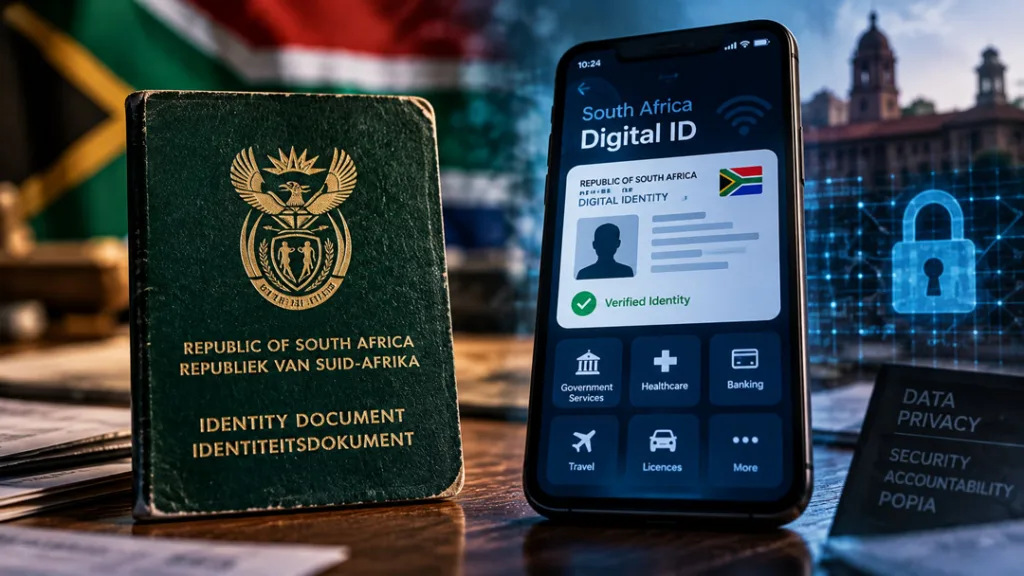
Johannesburg, South Africa — October 14, 2026 — South Africa is moving towards a future in which citizens will increasingly use digital systems to prove their identities, access government services and share personal information. The government describes this transition as a route to greater convenience, improved efficiency and stronger protection against fraud.
But an important question remains: what happens when the systems entrusted with protecting that information fail?
A reported security breach involving Gauteng’s e-Panic Button application provides a timely reason to examine that question.
According to Newsday, the Gauteng Department of e-Government was alerted to a vulnerability on September 21, 2026, involving an application with approximately 280,000 registered users. The Information Regulator had reportedly not received the required notification by September 30, while the department’s preliminary investigation report is expected on October 20.
The full extent of the exposure has yet to be established.
The incident is not evidence that South Africa’s proposed Digital ID system has been breached, nor does it establish that the two systems share the same vulnerabilities. Its significance is more fundamental: it raises questions about whether the institutions responsible for digital services can demonstrate that security, independent oversight and accountability are keeping pace with technological expansion.
A Digital Identity Is More Than an App
The government’s Digital ID initiative forms part of a wider effort to digitise Home Affairs services and enable identity verification through smartphones and other digital channels.
In an October 1 address, Home Affairs Minister Leon Schreiber said the proposed system would be voluntary, with physical Smart ID cards remaining available. He also stated that the final regulations would impose limits on how personal information could be used.
These are important assurances. However, a policy commitment to protect privacy is not the same as demonstrated security in day-to-day operations.
Digital identity systems depend on more than the credential displayed on a smartphone. They require supporting infrastructure, identity verification mechanisms, access controls, software, service providers and procedures for responding to security incidents.
The risks therefore extend beyond whether an individual phone is secure. They also concern how the wider system is designed, who operates its components, which organisations can access information and what happens if one of those components is compromised.
The central question is not whether digital technology can be made secure. It is whether the safeguards are sufficiently robust, independently tested and enforceable to justify the public’s trust.
The Problem With Asking Citizens Simply to Trust the System
The e-Panic Button incident raises a particularly important governance question: how should a security breach be investigated when a private company responsible for developing and hosting the affected application is also permitted to appoint an investigator?
The Gauteng Provincial Legislature’s committees have called for an independent investigation into the incident, including the cause of the vulnerability, the extent of the exposure and whether legal or contractual obligations were breached.
Independence matters because a credible investigation must be able to examine decisions made by the department, the service provider and any other parties involved without the appearance of a conflict of interest.
The same principle should inform the governance of national digital identity infrastructure. Independent security assessments, transparent procurement, clearly allocated responsibility and effective regulatory oversight should not be treated as optional additions once a system is operational.
They should be fundamental requirements before sensitive information is entrusted to that system.
What Happens When More Services Depend on Digital Identity?
The government’s digital transformation programme envisages broader use of digital identity and verified credentials across public services, with the potential for connections to other institutions and service providers.
Such arrangements could simplify access to services. They could also increase the consequences of a serious failure if identity information or authentication mechanisms were compromised.
The scale of the risk would depend on the system’s architecture, the information stored, the permissions granted to participating institutions and the effectiveness of safeguards. It would be inaccurate to assume that every digital system creates a single central database or that every breach would expose an entire population register.
Nevertheless, greater connectivity makes it essential to understand where information resides, how it is protected and whether the compromise of one component could affect others.
Citizens should be able to obtain clear answers to these questions before digital identity becomes a routine gateway to essential services.
The Case for Independent Scrutiny
The government argues that Digital ID will help modernise services and improve identity security. Those claims should be assessed against measurable outcomes and verifiable safeguards, rather than accepted or dismissed on political grounds.
At a minimum, the public debate should address five questions:
- Will independent security testing be conducted before deployment and repeated as the system evolves?
- Who will investigate a serious breach, and how will independence from the department and its contractors be guaranteed?
- What personal information will be collected, retained and shared, and under what legal authority?
- What notification, remediation and compensation mechanisms will apply when a failure causes harm?
- Will citizens retain meaningful access to essential services if they choose not to use a digital credential, consistent with the government’s stated commitment to voluntary participation?
These questions are not arguments against technological progress for its own sake. They are tests of whether a proposed system has earned the trust being asked of the public.
Convenience Cannot Replace Accountability
Digital government may reduce queues and make public services more accessible. But convenience should not become a reason to overlook the risks of collecting, processing and sharing sensitive information.
The e-Panic Button case is still developing, and its final findings may clarify the extent of the exposure and the measures needed to address it. Until then, conclusions about the precise consequences must remain provisional.
What is already clear is that the public has a legitimate interest in knowing how the breach occurred, why notification was delayed and whether the investigation will establish responsibility independently.
Those answers matter beyond Gauteng. They should inform the standards expected of every government system that handles sensitive personal information.
Before South Africa places greater reliance on digital identity, what evidence should government provide to demonstrate that its safeguards work, that independent oversight is real and that citizens will have meaningful remedies when those safeguards fail?
Related Reading: Read ANN’s report on the Gauteng e-Panic Button Data Breach and the questions it raises about government cybersecurity.
Sources: Newsday, Gauteng Provincial Legislature and Home Affairs Minister’s October 1 Address.