Fuel, Levies and Licence Fees: What Are South Africans Really Being Asked to Pay?
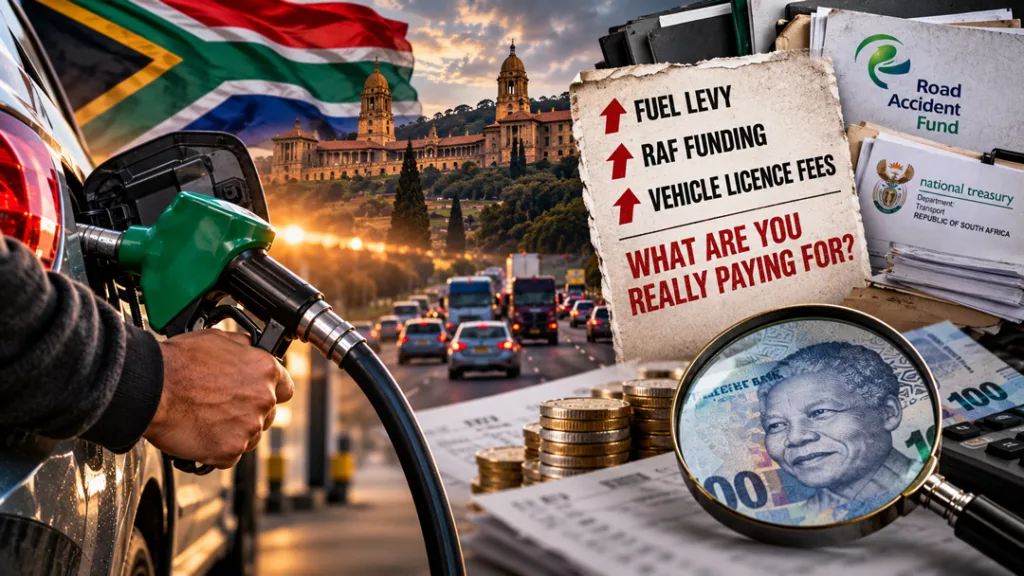
A proposed RAF levy increase, the end of temporary fuel-tax relief and concerns about additional vehicle charges raise serious questions about transparency, accountability and the cost of keeping South Africa moving.
South Africans are being asked to absorb another round of fuel-price increases while questions about taxation, public expenditure and the financial management of state institutions remain unresolved.
The immediate concern is the price at the pump. But the bigger issue is whether motorists can reasonably be expected to shoulder additional costs without clear explanations of where the money goes, what it achieves and why alternative solutions have not been prioritised.
Dear South Africa’s campaign, Reduce the Fuel Price, brings several of these issues together. It challenges the end of temporary fuel-tax relief, the Road Accident Fund’s proposal to increase its levy and the possibility of additional charges associated with annual vehicle licence renewals.
These issues require scrutiny. They also require a careful distinction between proposals, confirmed decisions and claims that have yet to be independently substantiated.
A R3.33 increase at the pump — and what it means
From October 7, 2026, 95-octane petrol increased by R3.33 per litre, while 93-octane petrol rose by R3.12. Diesel increases ranged from R2.84 to R3.24 per litre.
The Department of Mineral and Petroleum Resources attributed the increases to higher international crude oil and petroleum product prices, supply shortages, shipping costs and geopolitical uncertainty.
That explanation matters. It would be inaccurate to suggest that the entire October increase resulted from a deliberate domestic tax increase.
However, explaining why fuel prices have risen does not answer every question about what consumers are paying. Domestic levies form part of the regulated price structure, and government decisions about those levies can influence the final amount motorists pay.
The relevant question is not whether international markets matter. They plainly do. It is whether the government has adequately explained what measures remain available to reduce the domestic burden when international conditions deteriorate.
The relief that ended — and the money the Treasury gave up
Earlier this year, the government temporarily reduced the General Fuel Levy to cushion consumers against exceptional fuel-price increases. That relief ended on June 30, and the full levies were restored from July 1.
The intervention established that temporary relief can be implemented. It did not establish that such relief can continue indefinitely without consequences.
Treasury must balance consumer assistance against the revenue needed to fund public expenditure. Any further reduction would require a credible explanation of how the lost revenue would be managed.
Nevertheless, the public is entitled to ask why relief was allowed to expire while motorists remained exposed to substantial fuel-price volatility.
Could lower-priority expenditure be reduced? Could a temporary intervention be targeted more effectively? Could the government publish clear criteria for reinstating relief when fuel prices reach exceptional levels?
Those are reasonable questions. Dismissing them as financially irresponsible would be as unhelpful as pretending tax cuts have no fiscal consequences.
The RAF wanted more money. The minister said no.
The RAF’s proposed increase from R2.25 to R3 per litre would add 75 cents per litre to the levy if implemented in full.
The Fund has argued that its existing funding model is under strain, citing declining fuel volumes, inflation and the scale of its claims obligations. The proposal was intended to improve its financial position.
But on October 12, Transport Minister Barbara Creecy reportedly rejected pursuing the increase while she remained in office. On October 13, further reporting indicated that the RAF would not receive additional government funding.
These developments undermine any suggestion that the proposed R3 levy increase is already an approved government measure.
They do not, however, resolve the underlying problem.
The RAF must compensate qualifying road accident victims, yet its long-term financial position and capacity to meet its obligations remain matters of public concern. Motorists should not be expected to accept an additional levy without a transparent account of the Fund’s finances, its liabilities and the reforms intended to improve its performance.
What are the consequences of its current funding model? What changes are planned to claims administration and litigation costs? How will management demonstrate that additional revenue, if ever approved, would produce measurable improvements?
A funding request is not a substitute for a reform plan.
The licence-disc question: proposal or established policy?
Dear South Africa also warns about a possible additional charge linked to annual vehicle licence renewals.
The campaign argues that motorists could face charges both when buying fuel and when renewing their vehicle licences.
If a new blanket charge were introduced, its justification, scope and relationship to existing levies would warrant close scrutiny. But the legal status of the alleged surcharge must be verified before it is described as an established government plan.
The Department of Transport should clarify whether a formal proposal exists, what legislation would authorise it, which vehicles would be affected and how any revenue would be used.
If the measure is intended to address declining fuel-tax revenue as electric vehicles become more common, officials should explain why the proposed approach is appropriate and whether alternatives have been assessed.
If no formal proposal exists, that should be stated plainly.
Public debate is weakened when an unverified proposal is presented as a decision already taken. Accountability requires the government to disclose its plans, but it also requires campaigners and publishers to establish what those plans actually are.
The November forecast deserves attention — not exaggeration
The Automobile Association has warned that preliminary data could point to a petrol increase of up to R4.58 per litre in November, alongside a substantial diesel increase.
This is a projection, not an official November price announcement. The final adjustment will depend on international prices, exchange-rate movements and the other components of the monthly pricing formula.
The distinction is important because a forecast can change. It is nevertheless a legitimate reason to examine how the government intends to respond if the pressure persists.
The public should demand timely updates, transparent calculations and a clear explanation of which parts of the final price are driven by international conditions and which arise from domestic policy.
The accountability test
The fuel-price controversy raises a broader question about how the state manages financial pressure.
When households face higher transport and food costs, officials must explain their policy choices in concrete terms. When a public institution requests more revenue, its financial position and reform commitments should be open to scrutiny. And when new charges are discussed, the public should be able to inspect the underlying documents before being asked to comment.
That is not an argument that every tax should be abolished or that every proposal is necessarily misguided. It is an argument that public charges require transparent justification, demonstrable public benefit and meaningful accountability.
South Africans deserve to know what they are paying, why they are paying it and whether the money is being used effectively.
Read the campaign and make your position known
Dear South Africa’s campaign invites the public to comment on fuel-tax relief, the proposed RAF levy increase and possible vehicle licence renewal charges.
Read the campaign, inspect the claims and supporting material, and decide whether to submit your own response: dearsouthafrica.co.za
Should temporary fuel-tax relief be reconsidered? What evidence should the RAF provide before requesting additional revenue? And what safeguards should apply before the government introduces any new charge on motorists?
The answers should come from evidence, transparent public records and accountable decision-making — not assurances alone.